
Ms Christine Lagarde has told the National Assembly that the days of sharing oil revenue were over. She tasked lawmakers and the Executive arm of government to take hard decisions to deliver Nigeria from the present economic recession.
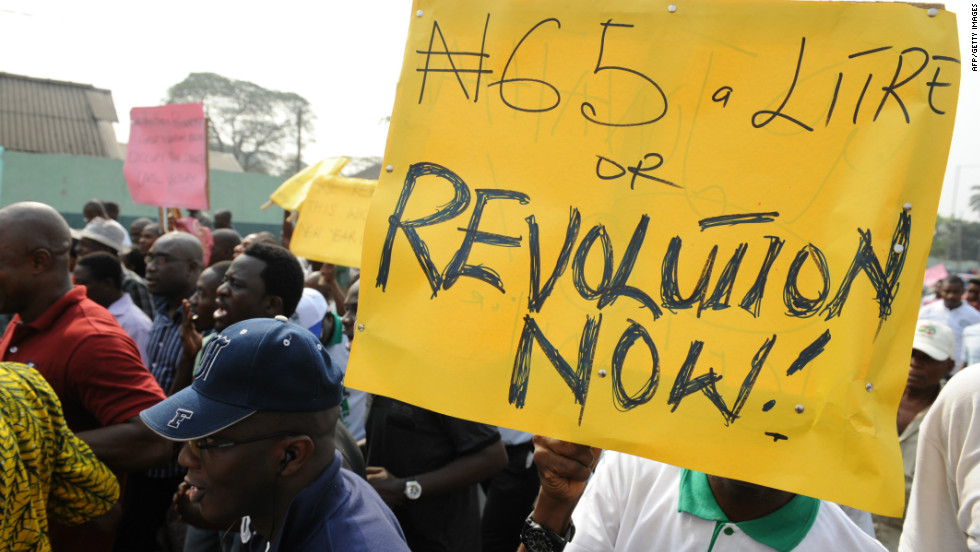
The IMF boss, who engaged the NASS leadership on the way fo rward for the country, said that the fuel subsidy scheme was no longer relevant because the rich had hijacked it.
Lagarde advised the government to jack up the current five percent Value Added Tax (VAT) and curb leakages in the public sector to raise more funds to provide services for the ordinary Nigerians.
She lamented that Nigeria was spending 35kobo of every naira it earned to service its huge debt.
The IMF MD, who met with President Muhammadu Buhari on Tuesday, told the Senate President Bukola Saraki that in considering this year’s budget, the Federal Government must take hard decisions on revenue, expenditure, debt and investment.
She said: “I see an immediate priority – a fundamental change in the way government operates. What do I mean by that? The new reality of low oil prices and low oil revenues means that the fiscal challenge facing government is no longer about how to divide the proceeds of Nigeria’s oil wealth, but what needs to be done so that Nigeria can deliver to its people the public services they deserve – be it in education, health or infrastructure”.
“This means that hard decisions will need to be taken on revenue, expenditure, debt, and investment going forward. My policy refrain is this:
“Act with resolve- by stepping up revenue mobilisation. The first step is to broaden the tax base and reduce leakages by improving compliance and enhancing collection efficiency. At the same time, public finances can be bolstered further to meet the huge expenditure needs. For example, the current VAT rate is among the lowest in the world and well below the rates in other Economic Community of West African States (ECOWAS) members – so some increase should be considered.”
“Nigeria’s debt is relatively low at about 12 per cent of Gross Domestic Product (GDP). But it weighs heavily on the public purse. Already, about 35 kobo of every naira collected by the Federal Government is used to service outstanding public debt”.
“Exercise restraint- by focusing on the quality and efficiency of every naira spent. This is critically important. As more people pay taxes there will, rightly, be increasing pressure to demonstrate that those tax payments are producing improvements in public service delivery.