
By Iyobosa Uwugiaren//
Former President Olusegun Obasanjo has never ceased to mesmerise me on some national issues. Recently the national dailies and the new media copiously placed news reports on how a committee, set up by the former President presented comprehensive reports on key sectors to serve as a guide to President-elect Muhammadu Buhari.
The Chairman of the Governing Board, Centre for Human Security of the Olusegun Obasanjo Presidential Library, Prof. Akin Mabogunje, who was quoted as speaking to journalists after meeting with Buhari, said that the committee had been working on a number of critical issues, including ways to tackle corruption – for the development of Nigeria. Imagine Obasanjo designing a framework for fighting corruption in our country! It is amazing.
Except somebody with a short-memory, many people still remember that under Obasanjo’s regime – as civilian president, Nigeria was severally rated the most corrupt nation in the world. Under his watch, our nation’s treasury was hugely and criminally depleted and our common wealth diverted for personal and selfish interest. And if he could not tackle corruption for eight years – when he was in power – with all the instruments of coercion at his control, what tactics or strategy can he offer now? A case of busybody? Maybe.
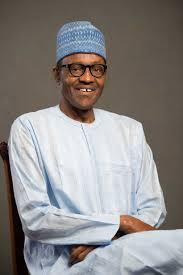
Well, it is alright. With a no-nonsense man, Buhari, waiting to take over power from the most ‘’abused, clueless and corrupt’’ President Goodluck Jonathan – in the next few days, it is now fashionable hearing people talk about corruption everywhere in Nigeria.
Indeed, Buhari’s campaign was deliberately predicated on two issues: Corruption and insecurity – rightly so, because there is currently huge perception that the outgoing government stinks – when it comes to corrupt practices and other related offences.
A senior diplomat in a chat with me, once expressed serious alarm about the huge corruption enveloping our nation. He talked about the massive socio-economic potential of the country and emotionally said, “Imagine a Nigeria without corruption!”
By suggestion, the diplomat who has been in the country for years – very familiar with the happenings in our country — has blamed corruption for the present-day state of our country and stated bluntly: Tackle corruption and every other thing shall be added unto you.
This diplomat is not alone in this conception. Every extreme critic of our country today sees every Nigerian as a thief. In their estimation or understanding, Nigeria spits out and rejects almost every notion of what constitutes the word “normal”. And, based on this notion, some foreigners fretfully bite their fingernails whenever they step their foot into our country or whenever Nigeria is mentioned.
Come to think of it: Can we really blame these critics – including the slow-thinking ones among them, who believe that all Nigerians are corrupt? Hold your gun first. Don’t fire yet: I strongly believe that there are still some decent and incorruptible Nigerians in spite of a few dubious ones who have by their messy deals damaged our reputation both at home and abroad. But the perception that Nigeria and Nigerians are very corrupt is huge. The issue has become a subject of much discussion within and outside the country. And if you are a journalist or columnist and you have not talked about corruption in the country, you are not a renowned columnist. If you are a pastor or Imam and you refuse to speak against corruption in our nation today, you may have been compromised.
Indeed, several seminars and workshops have been held on the subject with prominent Nigerians, especially many of those who have cornered our common wealth in the past, mounting the podium and speaking in a classy and fashionable manner of how corruption has tumble-down the foundation of our country. Just imagine former President Obasanjo and some shameless serving and former governors consistently talking about corruption in our country! That is how bad corrupt practices have become in our nation today.
I agree that because of the dubious activities of some of us, especially the political elite, businessmen and women, the so-called social and anti-corruption crusaders, ordinary people and even journalists, corruption has become a seemingly pandemic in our society. Many government officials now openly ask for bribe to do the job they are employed to do. Police and traffic wardens collect bribe from traffic offenders in broad daylight and let them go free. Politicians have looted and are still looting our treasury in billions.
The sad part is that these corrupt leaders drive cheekily expensive cars on the streets of our country, pompously displaying their ill-acquired wealth or loot. Many of them have been exposed in the past but nothing has happened to them; they have graduated from being governors to senators. But if a hungry person steals their telephone handsets he is sent to ‘’45-year imprisonment’’ with the assistance of some corrupt judges.
Experts have robustly discussed the issue of corruption severally. And, in their estimation, the fundamental factors that are engendering and promoting corruption, which some people have described as ‘’the most lucrative and flourishing business’’ in our nation today, are many.
For sure, there will be corruption when political offices at all levels of governance have become primary sources of acquiring huge dubious wealth in our nation. Corruption will blossom when the social and governmental enforcement mechanisms are very weak. Our country will continue to celebrate corrupt practices when there is swelling conflict between changing moral codes and very notable lack of strong sense of national community.
Yes, corruption is not peculiar or restricted to our society but it is fast and obviously becoming a viable business in our nation. Check it out: many of us are obsessed with material things; we want to be well-known by our material possession. We talk about the kind of or how many cars we own; we venerate suspicious wealth in public places – including in churches and mosques – and sing praises of known crooks who make colossal donations to us. Some of us journalists who are constitutionally empowered to at ‘’all time’’ hold public officers accountable and expose corruption are progressively more becoming part of these shameful teething-troubles – we are increasingly being compromised by corrupt political elite and business crooks in our nation.
The consequences are that our actions or inactions have destructively squeezed the socio-political and economic growth of our nation: Reduced level of investment, lower public spending on education, healthcare, salary/wages and infrastructure. And it has taught us many huge wrong lessons – that it is not profitable to be law-abiding, honest and hardworking.
Fnd out: Many political officeholders have acquired huge wealth and properties within and outside the country. Go to the UK, Singapore, South Africa, Dubai and other countries — some of the big and expensive mansions are owned by our politicians, especially serving and past governors who have today become anti-corruption crusaders. And because politics in our country has become a do-or-die affair, we just witnessed what some of our politicians did to retain power or dislocate their opponents. It is criminal and shameful.
Like many troubled people have asked: When did we get to this stage? How can we tackle the problems? I do not have the answer(s). It seems to me Buhari and his party, APC have the magic key to switch off the problems, going by their manifesto and public utterances in the last few months.
But, just imagine if there were no corruption in our lovely nation! Nigeria, known as “the Giant of Africa”, is the most populous country in Africa, the seventh most populous in the whole world where its oil resources have brought great revenues to the country. We have been classified as a mixed economy emerging market in the world and we have already reached middle-income status, according to the findings of the World Bank. We have abundant supply of natural resources, emerging communications sectors and stock exchange which is the second largest in Africa. We were ranked 31st in the world – in terms of GDP (PPP) few years back.
Just last year, the IMF projected a 9 per cent growth in our economy. Citigroup- a leading global bank, has projected that our country would get the highest average GDP growth in the world between 2010 and 2050. We have one of the fastest-growing telecommunications markets in the world. Our great country also has a wide array of underexploited mineral resources which include natural gas, coal, bauxite, tantalite, iron and others. We have vast areas of underutilized arable land.
Just imagine where Nigeria would have been without corruption! And the question is: Can Buhari stem this fast growing viable and lucrative business – corruption?