
 Aladja is a coastal town and one of the largest and highly populated indigenous towns in Delta State. It is located on the bank of southern part of River Warri, opposite old Warri city. The majority of the people are of Udu, a sub-group of Urhobo ethnic group. Until recently, a section of the town was predominately occupied by people of Ijaw ethnic group who eventually migrated because of the bloody land disputes that existed between Urhobos and Ijaws in the 1990s.
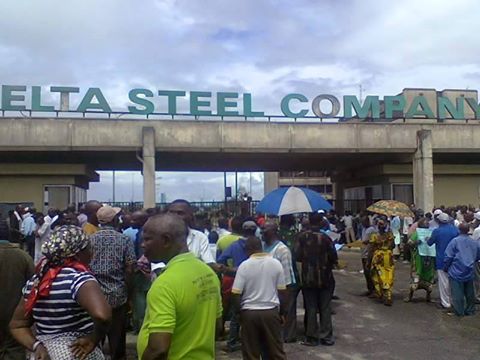
 The Aladja (DSC), an integrated steel manufacturing industry is situated on hectares of land provided by both Ovwian and Aladja communities but the steel plant is partially redundant as a result of mismanagement.
When it was commissioned in 1982 by former President Shehu Shagari amid fanfare and anticipation, the N 3.2 billion facility was targeted to produce pellets, rods, angle barbs, real barbs, plain rods, ripped rods, billets, nitrogen among others.
The company was built by a consortium of German and Austrian firms with Indians as consultants.
Though a shadow of itself now, the premier steel plant is presently operating at the lowest ebb. This, notwithstanding, adjoining towns and villages which are the host communities complain of years of hazardous fumes emanating from the plant.
It is a global practice that the concerns of host communities of such facilities as is present in the steel plant are taken serious because of potential environmental hazards.
The adjoining communities here contend with waste and noxious fumes emanating from the plant. These wastes are believed to be hazardous to human health and the environment.
Though at inception the host communities welcomed the citing of the plant in their domain as a good development in terms of job creation and a boost to social activities, the reverse has however been the case for almost twenty years now.
Emissions from the company worries the Ovwian, Aladja, Orhuwhorun, Egini and Ubogo communities. Other communities that host waste from the facility are Upowhuin, Oghor, Oleri, and Isaba.
A former top official of the company who spoke on the dwindling state of the plant, Mr. Caesar Kagho said that the plant started very well but added that problems started as a result of human errors.
“The white men built a gigantic plant, but sadly we cannot manage it. We are not interested in the future posterity because we want immediate benefit”, said Mr. Kagho, regretting that the plant did not survive up to fifteen years nor attain full capacity production.
He opined that one of the hazardous areas in the plant is the steel melting pot where the fumes come from.
To remedy the situation, the former staff suggested that Nigeria should adopt the World Standard Pollution Control.
Kagho further suggested that the affected communities should cry to various human right organisations to confront the management of the plant and make them do the right thing.
Although, the company is presently carrying out skeletal jobs, its poisonous waste products are being dumped indiscriminately in various positions located within the area to the detriment of the communities and their environment.
When this correspondent visited the communities, a septuagenarian, Okorho Ogheneovo, decried the poisonous waste coming out from the gigantic plant, describing them as not only deadly but ruthless in nature.
Ogheneovo who would not like his photograph to be taken, lamented that at the initial stage, the people thought the waste could serve as manure for their farms until they started noticing the destruction it wrought.
The septuagenarian who spoke in Urhobo Language and pidgin English said: “Can’t you see that our environment has been destroyed, degraded and some buildings giving way as a result of the effect of the waste”.
Describing the massive waste as unfriendly and destructive, another resident from Oleri village, Mr. John Igho revealed that numerous fish ponds in the area and roads have been polluted and taken over by waste being dumped indiscriminately in the area.
At Udu community, Julius Oghre, who is a farmer narrated how the waste from the Delta Steel Plant devastated part of the community. “Now a lot of persons have contacted strange diseases. We have more people suffering from whooping cough and other ailments related to the waste.
Also commenting, on the issue, Human rights activist – Comrade Austin Ozobo lamented the level of pollution caused by the plant and the ignorance of people in holding the company accountable.
He noted that DSC should be sanctioned and asked to pay damages for polluting the water ways and causing ecological degradation.
Ozobo who is an Ijaw opinion leader regretted that host communities have been affected following the intake of fumes emanating from the steel plant, insisting that efforts should be made by management of DSC to redress the unfortunate situation.
According to him, Ijaw communities within the catchment area are suffering greatly through inhalation of polluted air and drinking bad water.
He stressed that the waste dumped in the river does not allow free flow of boats that ply the riverine area, consequently impeding passengers’ movement on the route.
To remedy the situation Ozobo urged both Federal and State government to do something urgently to save the host communities, even as he added that there are other Ijaw communities such as Burutu, Gbekebor, Ayankoromo, Ogberugbene that have been affected also.
“The most dangerous thing is that all the communities fetch drinking water from the same river that has been polluted by the company. The affected communities are planning to drag DSC to court to pay for all the damages the communities have suffered.
An Aladja indigene Mr. John Digbori, expressed anger over what the company has put the host community through in the last 20years.
He recalled that at the inception of the company over 10 host communities were happy, believing that relief had come to them in terms of job creation, boom in socioeconomic life as well as anticipation of adequate security’s.