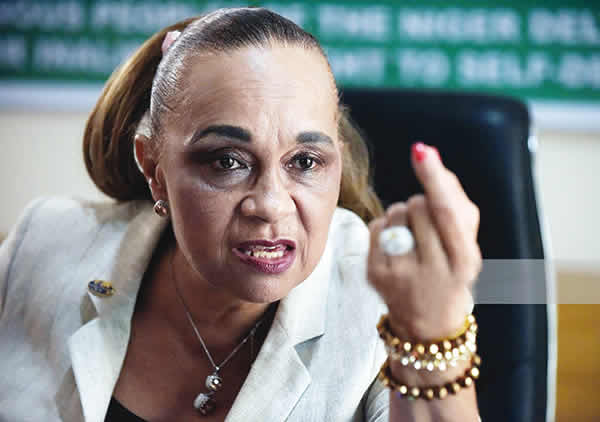

 “Nigeria does not need Niger Delta. She needs Lagos more.” – Emir Sanusi Lamido
The Niger Delta is located in the delta of the Niger River sitting directly on the Bight of the Biafra side of the Gulf of Guinea on the Atlantic Ocean. It is a very densely populated region sometimes called the Oil Rivers because it was once a major producer of palm oil before the discovery of crude oil. Currently, the delta is a petroleum rich region, contributing to Nigeria becoming West Africa’s biggest producer of petroleum with an estimated 38 billion barrels of crude oil still residing under the delta as of early 2012. But unfortunately, rather than attracting massive developments due to its resource accumulation base, it has instead been subjected to international controversy over pollution, corruption, and human rights violations.
Conversely, Lagos which lies on the western region was initially a port city from its collection of islands. It became a former capital territory of Nigeria on amalgamation in 1914. As expected of a capital city, it attracted a lot of investments as the center of excellence; and as such benefited hugely from not only the petroleum resources found in the Niger Delta area in terms of oil revenue allocation but from the oil industry operators that have the head offices of these oil corporations domiciled there. As the largest city in Nigeria as well as in the African continent, Lagos is adjudged to be the fastest growing city and one of the most populous in the world.
Therefore, it is sad to note that while Lagos state utilized the opportunities bestowed upon her, not same can be said of the Niger Delta area. For instance, Lagos state as an island has seaports; likewise the Niger Delta states. But while Lagos as a state has harnessed this natural resource to raise revenues to spurn her developmental needs, the Niger Delta has not been able to do same. Indeed I find it strange that for a Niger Deltan to import certain goods from abroad to his home state, he has to leave his own shores in the delta where there are abundant sea ports to a faraway place like Lagos. Is it a deliberate act by one of the major ethnic groups that has been in political power to prevent the development of those same resources in the delta area, so that there would be a steady influx of income from other regions to its stead? If indeed it is, then I would say that those behind this plan are smarter than the Niger Deltans!
The development of the Niger Delta region has been largely undermined by certain factors. One of such factors is what I will term as the ‘human factor’ and to begin with, the first is the multiplicity of her ethnic groups. This factor is largely missing in a state like Lagos and in the western region of the country that has only one major dominant ethnic group, though with slight variations of the spoken language (dialects). This multiplicity of the various indigenous groups in the delta area has made it difficult for the region to speak with one voice or to live in harmony, making it a wedge against its developmental moves. For instance, in Delta State, there are constant imbroglios between and among certain ethnic groups. A very recent one is that between Ogbe-Ijoh community (an Ijaw settlement) and Aladja community (an Urhobo settlement). And so, as much as the Niger Delta region has been crying foul play of perceived marginalization and injustice from the dominant ethnic groups that have been lording its resources for the development of other areas outside of the delta, it is sad to say that its house has constantly been lit on fire from within by the forces of greed, envy, and rife.
Another important human factor is that of poor leadership. There is no saying that right leadership is very important to the development of any nation, because poor leadership will make nonsense and waste of abundant scarce resources. Where there is poor leadership, corruption will definitely thrive, leading to the abject poverty and suffering of the masses. Poor leadership is also exemplified in the area of bad administration of scarce resources through the diversion of public funds (as accountability will be expunged) for private or individual interests as against the benefit of the masses. Poor leadership is also exhibited in the lack of vision to see into the future from the happenings of current trends, resulting in the inability to plan ahead for tomorrow and creating a very volatile future environment. The presence of poor leadership is also one that can instigate violence due to its lack of understanding and skill in handling and curtailing certain social vices that are detrimental to its developments.
These two human factors: disunity and poor leadership are what is greatly to a large extent undermining the development of the Niger Delta area as a whole. They have proved true the saying that, “Money (resource) doesn’t solve problems; it’s people that do.” That the abundant scarce resources hasn’t translated into the required infrastructural developments needed in the Niger Delta region is because the Niger Delta people are still a sleeping giant that is yet to awake from its slumber of pettiness as seen in the play of greed and selfishness.
In my opinion, the Niger Delta people do indeed love themselves but most often it is the failure of the lack of visionary leadership to steer the Niger Delta ship in the right direction that has become the bane of its growth. The Niger Delta area is not the only region that has multiplicity of ethnic base; the United States of America as large as it is has more diverse ethnic base, but they haven’t started maiming each other. Instead, they have tapped into their strengths in diversity to develop their economies to the admiration of all. Why can’t we do the same?
The issue of poverty and unemployment knows no barrier, neither is any ethnic group immune from it. This is what all Niger Deltans should reflect upon. They should learn to see the bigger picture of things rather than the myopic tendency to which they attach in doing things. Issues like disagreements over land ownership, instituting lordship over others, instigating others to violent actions, shortchanging each other over contracts and appointments, etc. are at best fighting over crumbs of bread on the table. There is much bigger bread on the table that is worth fighting for, such as having more international functional seaports, domiciling of all head offices of oil corporations in the region, massive engagements of her youths in the oil industry, getting the right people with the track records and tendency to lead, etc.
But first, we the Niger Deltans must overcome the tendency of disunity amongst us and strive to institute the right leadership in place. For where there is poor leadership, disunity will thrive; and where there is disunity, a house can never stand but collapse like a pack of cards. Therefore, for the present generation to build the Niger Delta of our dreams, unity and exemplary leadership must first of all others, be sought, attained and sustained!
Sir Francis Abai is a Business Entrepreneur and Business Coach.