

Hearing about the word Soot one will think it is just a simple harmless smoke or dust particles which originated from a nearby bush fire or a local fire wood kitchen around the community, but no it’s more than what we think it is. Soot is particles of carbon produced from incomplete combustion of coal, fossil fuels, wood, oil and other hydrocarbon substances.
Soot usually consist of tiny acid particles, chemicals, metals, soils and dust from the atmosphere, they have the common characteristics of an extremely tiny particle of -2.5micrometers or smaller in diameter more than dust particles or mold. Soot usually carries with it dust, molds and smoke, with this combination – extremely small size and toxic composition – is what makes soot so dangerous to human health and the environment.
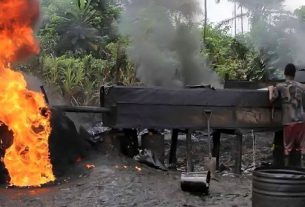
It can travel deep into the lung, where the toxic compounds it consists of can do some serious damage. Sources of Soot Soot is the byproduct of the burning of fossil fuels most especially from refineries, manufacturing industries, waste incinerators and from cars. Soot enters the environment either as a solid particle or as a gas which turns into a particle after it has been released. These particles can end up very far away from their site of origin. Soot in Ubeji community over the years has become a serious health and environmental hazard as it has lead to series of health problems for inhabitants of the community. Most times their roof and house becomes dusty with soot from the Warri refinery and petrochemical company.
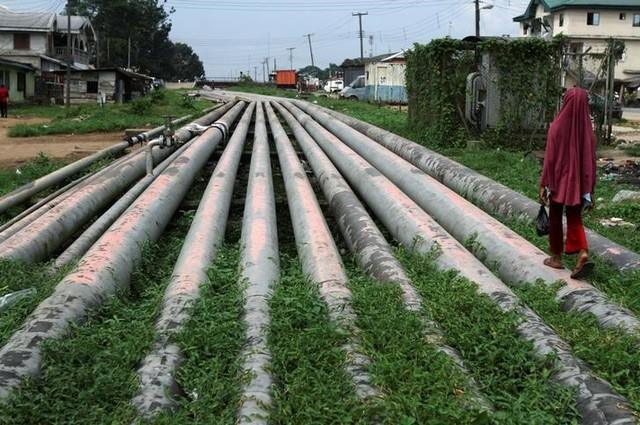
Apart from Ubeji community located directly behind the Warri Refinery and petrochemical company (WRPC), we have other communities located along that axis which also partake in the soot air pollution. Community such as Ekpan,Ughorton, Ugbokodo, Jeddo among others. For those of you who don’t know where Ubeji is, Ubeji is a small Itsekiri community located directly behind the Warri/Effurun Refinery in Warri South Local Government Area of Delta State. Few days ago the people living in these communities around the Warri/Effurun Refinery had to keep their doors and windows shut because of the heavy impact of soot flying in the air around their environment.
According to an eye witness account: In Ubeji, by the refinery, some days, we have to keep our windows shut. We woke up in the morning to see soot deposited on our car and around our home… Even indoors, when you step on your tiles with a wet foot, it shows you the black stains of soot… It is so sad, a few people are collecting moneys, and the refinery is been forced to work at all cost not minding the consequences… I was in a very sad state on Saturday night after I left Ubeji…and I was reminded of all I have seen from my visits to the creeks…. I am appealing and calling on all concerned and educated or that have some level of influence… we need to change things…policies, enforcement, plans, development etc – By Akpo Bawo Ofere, Warri.
Another Resident who pleaded anonymous explained that the issues of soot in Ubeji has been a long time issue but it’s just that sometimes it is worst than times due to the state of the refinery e close to the community and this has also affected the health of the community people most especially the children who usually experiences respiratory diseases such as dry cough, asthma and bronchitis. Health Risk and Impact of Soot on the Environment Due to high level of concentration of compounds contained in the soot such as sulfur dioxides and nitrogen oxides, carbon, combined with moisture to form toxic acid rain, which worsens water quality, damages soil and crops, and changes nutrient balances in various ecosystems the people, also suffers respiratory diseases.
Breathing in the tiny soot particles can cause coronary heart disease, asthma, bronchitis, and many other respiratory illnesses. In other parts of the world research has also shown that many premature deaths are directly related to soot in the environment. Particle exposure leads to around 20,000 premature deaths in America each year. Many of these deaths were caused by soot-related diseases. Data also show that soot annually causes almost 300,000 asthma attacks and 2 million lost workdays due to respiratory problems, I feel this scenario is no different from the experiences of the community people living around the Warri Refinery and Petrochemical Company (WRPC).
We are using this medium to call on the State Government and the Federal Government to carry out proper maintenance on the refinery equipment or better still decommission the flare stacks as they are no longer refining products there, also they should provide an immediate solutions to the issues of soot pollution and health crisis in these communities before these health cases becomes an epidemic that can no longer be curtailed.